Always wear glasses, safety glasses are best. Murphy’s Law
is that if a hook goes flying it’s going to hit you. If you’re casting or
trolling, sharp hooks whizzing through the air are just normal. Someone is
bound to get nailed eventually. Also when you have a fish next to the boat,
hooks sometimes pop free and your eye is their favorite target. It really sucks
to get a hook buried in your hide but one in the eye can be the end of your
sight.
Tuesday, March 11, 2014

Thursday, March 6, 2014
Outdoorsman! are we playing with our food?
 The short answer is probably yes, at least at some level. An
Inuit Indian once said that people who are not keeping and eating everything
they catch, kill or harvest are playing with their food, to take what you need
and leave the rest behind, and that we should take only what presents itself to
us. The Inuit believed that if we catch an unneeded fish, pass up a small buck
or harvest asparagus or ginseng for cash, we’re breaking the laws of nature. He
believed that when you have what you need don’t disturb the plants and animals
any further. Plus, trust that the plants and animals will always make the best
decisions for themselves and nature will control their population. This Inuit
was a true sustenance survivalist and I commend him for his skills and
accomplishments. However, although I agree with most of their practices and
beliefs I am not sure that modern society can live the same way. Human population
density does not allow us to continue like that. The ego of the modern
sportsman and government regulations are other issues preventing it. We like to
play with our food and our government encourages it.
The short answer is probably yes, at least at some level. An
Inuit Indian once said that people who are not keeping and eating everything
they catch, kill or harvest are playing with their food, to take what you need
and leave the rest behind, and that we should take only what presents itself to
us. The Inuit believed that if we catch an unneeded fish, pass up a small buck
or harvest asparagus or ginseng for cash, we’re breaking the laws of nature. He
believed that when you have what you need don’t disturb the plants and animals
any further. Plus, trust that the plants and animals will always make the best
decisions for themselves and nature will control their population. This Inuit
was a true sustenance survivalist and I commend him for his skills and
accomplishments. However, although I agree with most of their practices and
beliefs I am not sure that modern society can live the same way. Human population
density does not allow us to continue like that. The ego of the modern
sportsman and government regulations are other issues preventing it. We like to
play with our food and our government encourages it.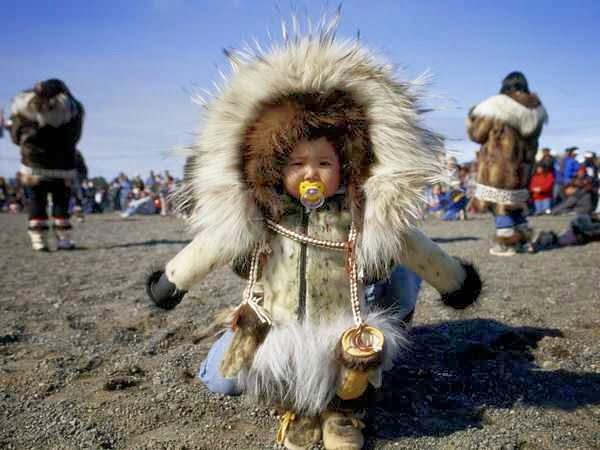 Sportsmen’s relationship with nature is always changing. Modern
sportsmen and outdoors enthusiasts are not involved because they need to, but
rather because they want to. The urge to fulfill a primal instinct still exists
and has forced the government to step in, making laws preventing us from
destroying everything in the water, woods and air, and at the same time
encouraging us to play. Take a look at the last 40 years as an example. Size
and bag limits, speed and noise restrictions and emissions requirements. People
who participate purely for entertainment and with almost complete disregard for
nature are not as common now. However, people who just want to play with their
food are.
Sportsmen’s relationship with nature is always changing. Modern
sportsmen and outdoors enthusiasts are not involved because they need to, but
rather because they want to. The urge to fulfill a primal instinct still exists
and has forced the government to step in, making laws preventing us from
destroying everything in the water, woods and air, and at the same time
encouraging us to play. Take a look at the last 40 years as an example. Size
and bag limits, speed and noise restrictions and emissions requirements. People
who participate purely for entertainment and with almost complete disregard for
nature are not as common now. However, people who just want to play with their
food are.
Recently I overheard a conversation between two hunters who
were wishing that darting animals for sport, hunting by remote control and
paint balling deer was legal. Wow! Talk about playing with your food. They
didn’t want the meat and were hunting only for the thrill of the kill and the
ego blast. One of them thought it would be a great idea to dart an animal, take
pictures and let it go. My head almost exploded! Come on outdoorsmen, think
about what you’re doing to the animal physically and mentally and control your
ego blast. To me this shows a complete lack of respect for, and understanding
of, their quarry. My belief is that these two are definitely playing too many
video games, have lost touch with reality and have no place in the woods. They
believe that they would be practicing good conservation measures; after all it
wasn’t going to kill the animal.
We need to be patient with each other. As Spock once said “the
needs of the many outweigh the needs of the few”. We need to think about what each
individual contributes to conservation activities and understand that we’re all
in this together. If we are tolerant and stick together good things will
happen.
 Take a look at the money that outdoorsman and outdoor
enthusiasts give for licenses, fees and donations. The money flows to all sorts
of projects, yes, some of it does get wasted but for the most part the money
really does an incredible amount of good. Just look around where you are
locally and you’ll see it. There are stream remediation, fish restocking, habitat
improvement and soil and water cleanup projects. These projects need to be
funded in order for them to happen and it takes involvement from everyone.
Take a look at the money that outdoorsman and outdoor
enthusiasts give for licenses, fees and donations. The money flows to all sorts
of projects, yes, some of it does get wasted but for the most part the money
really does an incredible amount of good. Just look around where you are
locally and you’ll see it. There are stream remediation, fish restocking, habitat
improvement and soil and water cleanup projects. These projects need to be
funded in order for them to happen and it takes involvement from everyone.
For the good of nature we need to accept and cooperate with
the rules and regulations and most importantly each other. I have to tolerate
the trophy hunters - playing with their food, sorting through the herd, killing
the genetically superior animals; and they have to tolerate me sitting on my
favorite fishing hole, playing with my food, sorting slot limit fish for hours.
So go ahead play with your food, just remember to take what
you need and leave the rest behind. If
we could only sort through jet skiers like that my life would be much better.
(:
Sjn
Monday, February 24, 2014
What can we learn from the Japanese fisherman?
 |
| Japanese fish drying rack |
The Japanese civilization has existed on an island for
thousands of years. They don’t have a large land mass so they look to the sea
for food. Still today one of their main food sources is fish. The culture has adapted to eating just about
anything edible that can be caught or harvested from the sea. I would expect
that after all these years of fishing and harvesting around the island that
there wouldn’t be any aquatic life left. The Japanese know they have seriously
damaged the surrounding reefs and polluted the water. Over time they have found
ways to protect the environment and keep themselves fed at the same time. The
government is practicing sustainable fish and seaweed farming and is allowing
selective harvesting of fish by individuals. The fishing techniques and gear used
by the individual fisherman is what caught my interest.
 |
| Umbrella hooks |
During a visit to Japan I wanted to do some surf casting. I
needed some gear so I went to a basic bait and tackle store and then to a
saltwater inlet. The store was like any store you would see in the U.S. but had
some unexpected differences in the tackle they are selling. In the U.S. we use
barbless and circle hooks for catch and release fishing. The Japanese use a
hook that looks like two upside down umbrellas stacked on top of each other. It
has a main shaft with several straight barbless prongs coming off it at about a
45 degree angle. My first impression was that it wouldn’t hook up very solid
and come out easy, then like a fool, I touched it. Turns out that I was wrong,
they work great! The prongs are not designed to work independently but as a
unit. It was like grabbing a hold of one of those burdock seed pods that get
stuck to your clothes in the fall. The dried out ones with the spikes all
around it. If you try to shake it off or roll the hook out the next prong will
get you. The only way to release the hook was to push it straight back, cussing
doesn’t work. It is really a well-engineered hook. It is quick and easy to
remove, once you know how, plus does minimal damage to the fish.
 |
| Jerk baits |
At the bait and tackle store I noticed that a good 90% of
the fishing rods were the collapsible type. They were the 3 to 5 section kind. The
store stocked several different manufacturers, lengths and weights. I bought a
medium weight, 5 piece. I thought that it would be easy to get in a suitcase
but would probably go flying apart every time I made a cast. At the inlet I saw
that everyone was using them and was wondering why. In the U.S. we essentially
only use 1 or 2 piece rods. Why would an entire culture use a collapsible rod? My
experience with their choice was positive, the rod didn’t go flying apart plus
had a great backbone and a sensitive tip. The rods are high quality and very
well engineered. I think the reason is compactness and portability. The
Japanese have smaller living spaces relative to the U.S. and tend to live
vertically not horizontally as most of us do. Also the Japanese prefer to walk
or ride bike to destinations. A 10’ rod will breakdown into a 40” kit and can
be easily stored and carried.
I’m going to try to find some advertisements for the lures
and fishing poles I used and attach them to this blog. Take a look at them,
they’re a little different than what we’re accustomed to using. Some of the
gear was made in the U.S. but isn’t advertised here, we might be missing out on
a good thing.
Monday, February 17, 2014
Fishing the ice fishing fisheries for fun and charities.
Most people are not professional fisherman but like to go
fishing and also do their part for charities.
Every year more and more people of all skill levels and experience are
attending ice fishing contests for charities. Most people don’t realize that
the smaller, local fishing contests are not sponsored by a professional fishing
organization but are charity events. These events are becoming quite popular. There
are an increasing number of people who attend for the fishing contest but many
others just for the door prizes and people watching. Almost all of the prizes
are donated from individuals, local groups and businesses. Most prizes are more
valuable than you would expect and it’s not all about winning only fishing equipment
or cash.

The door prizes are like opening a box of chocolates, wide
and varied. There is everything from hiking equipment to quality art pieces and
even teeth cleaning. Many fisheries now allow you to put your tickets on
specific prizes. I think organizers discovered that donations increased when
they allowed people to enter for what they really want and not a random prize
that they didn’t have a use for. I don’t think anybody won the teeth cleaning.
I’ve won a bunch of stuff like gift certificates, an ice auger and bottles of
booze. Entering for door prizes is easy and cheap. There are the big prizes
that can cost around $25.00 for two or three tickets and there are the smaller
prizes for about a buck a ticket. Some events even hand out “mystery bags” full
of fishing stuff and discount coupons just for showing up.
Entering the fishing contest is easy and cheap too. The
entry fees I’ve seen have been around $20.00. There isn’t any prequalifying
requirements for the contest, just show up and fish. The contest is for the
biggest fish in a category. The categories and rules vary for each event so
check with the registration desk on your way in. Some events require live
release now. I haven’t ever won but always enter because you never know when
you might “catch the big one” and the money goes to a charity anyway. The
prizes for winning a biggest fish category are usually cash and sometimes a
significant amount. I’ve seen 1st place for up to $1,000.00 and 2nd
$500.00.

 People watchers bring your cameras. You can’t see people
dressed like this while doing this type of activity anywhere else. The dress
code is, I’m going ice fishing, I’m dressing for the cold and I’m going to get
fish stink on me. I don’t mean the North Face type outfits, I mean the outdoor working
stiff kind for people who live in the cold. You have to see it to believe it.
Go see the movie Grumpy Old Men, the clothing is kinda like that. You’ll see a
lot of homemade clothing like hats, gloves and scarves. Some of it is really
quality, interesting work and some is more like a yard sale. There are also
people who dress for their favorite football teams, there are pirates and there
is always the blaze orange hunter look. It’s more about function with a touch
of personal flare than it is fashion. A word of caution though, some people who
attend these events are a little introverted, so not everybody likes to have
their picture taken, be polite and ask first.
People watchers bring your cameras. You can’t see people
dressed like this while doing this type of activity anywhere else. The dress
code is, I’m going ice fishing, I’m dressing for the cold and I’m going to get
fish stink on me. I don’t mean the North Face type outfits, I mean the outdoor working
stiff kind for people who live in the cold. You have to see it to believe it.
Go see the movie Grumpy Old Men, the clothing is kinda like that. You’ll see a
lot of homemade clothing like hats, gloves and scarves. Some of it is really
quality, interesting work and some is more like a yard sale. There are also
people who dress for their favorite football teams, there are pirates and there
is always the blaze orange hunter look. It’s more about function with a touch
of personal flare than it is fashion. A word of caution though, some people who
attend these events are a little introverted, so not everybody likes to have
their picture taken, be polite and ask first.Monday, February 10, 2014
Catch and release fishing, unhooking the toothy angry ones
I have been fortunate to have caught musky, pike, sharks and
barracuda. It’s rare to keep this type of fish for table fare. There are ways
to release fish without hurting them or yourself. I speak from experience when
I tell you that without a doubt these fish have one thing in common, they want
to hurt you bad! They have a very
aggressive attitude about being hooked and coming into the boat. You have to
forgive them for having such a bad attitude because that’s precisely why we
like to catch them so much. Fish, especially predators do not like to be drug
around by a hook caught in their mouth and they absolutely intend to fight back
in any way they can. They would truly love an opportunity chew up your hand or
shove a treble hook into you. So here lies the conundrum, how to get this crazy
critter off the hook without injuring it and keeping yourself from needing a
trip to the emergency room.
Respect the fish, especially their big gnarly teeth, but
don’t fear them. Danger zones on fish
vary but if you avoid the head and tips of the fins you’ll be ok. Fish are in a
weakened state right after you catch them. Predator fish really fight hard so
its best let them rest for a couple of minutes before removal from the water. If
you bring fish into the boat too soon they’ll still be oxygen starved. They
must to be revived for a few minutes before bringing them in. If you do it
wrong, some could die, especially the older ones. While they’re recovering is
the best time to remove the hooks, more about this later in the article. Get
familiar with techniques for reviving and releasing fish. There are “how to”
videos and books available on the internet. In a nutshell, to get oxygen they
have to have water moving across their gill plates. A good policy is if you
don’t need to bring fish into the boat, then don’t. For instance, if you
already have pictures of similar fish or aren’t interested in the exact length,
don’t take it out of the water at all. Release them outside the boat whenever
possible. The less you handle them the happier you’ll both be.
There are several ways to unhook the big one but it depends
on the situation. I have been fishing on a couple of occasions when we weren’t
expecting to catch any big fish and only brought a small net. Well, sure enough
that’s when I caught a great big predator. Then what do you do? Try this, bring
them in the normal swimming position, parallel and close to the side of the
boat. Don’t let them touch the boat or they’ll go tearing off again. Reach in
from behind the eyes of the fish, sort of sneak up behind it. From above the
top side of the fish. Thumb on one side and all the other fingers on the other
side of the fish and grab it just behind where the gills end. Don’t hesitate
you just gotta go for it. As soon as you get a hold of the top of it reach
under the belly with your other hand and lift. If all goes well you will have a
good grip and be ready to bring it into the boat. Once you lift it in the boat
most of time you can release the hand underneath it. You’re going to need that
hand free to get the hook out.
A couple of helpful tools for handling and controlling fish are jaw spreaders
and game grabbers. Open it in or attach one to the fish’s mouth before lifting it
into the boat. These tools make great handles. Using tools makes the job easier
and hurts the fish less in the long run.
Be careful not to drop the fish in the boat. If that
happens, all sorts of mayhem will ensue. It’s going to go flopping all over the
place, causing all kinds of trouble. If you’re not careful this might be the occasion
with the trip to the ER.
For fish you don’t or can’t bring it into the boat, just
lift the head up a little and take out the hooks. If you’re using a leader you
may not need to grab the fish at all. Control the fish with the leader and use
the other hand to get the hooks out. When I say the other hand I mean to use a
hook remover of some sort, not your fingers. I’ve watched many people, even
professional fisherman, try to get hooks out with just their fingers. As my
grandpa would say, “What, are ya’, stupid?”
There are all sorts of hook removing tools available. Needle
nose pliers, forceps and hook disgorgers are most common. None of them are
particularly expensive, five to ten dollars will get what you need. Even a
small stick with a V cut in the end will work.
The big picture here is that the less time spent releasing,
the less chance there will be of hurting the fish and yourself.
Friday, January 31, 2014
Meals ready to eat (MRE)
Packing meals ready to eat (MRE) on outdoor adventures is a quick,
easy and light weight way to stay out there a little longer. When they first
became available to the public I tried a couple entrees. To say they tasted
like crap is an understatement. To many carbs, way to much salt or just a big
mushy mess. They were originally designed for soldiers in the field. The soldiers
were just glad to get something to eat and didn’t have time to be picky. The manufactures
have improved some of the meals and are now marketing to the outdoor recreation
type person. The meals are still not as good as home cookin’, but are enjoyable
if you don’t have to eat them every day. There is a time and a place to use
them now.
I was sitting in my deer blind this year and like most
hunters, would like to stay on stand all day. It’s only possible to stay for so
long because at some point you have to eat. As soon as you go moving around to
walk out for lunch that trophy you’ve been waiting for sees or hears you and
goes running off. MREs may not be fine cuisine but are better than the usual
soggy sandwich, they are a hearty warm meal that will get you through the rest
of the day. Everything’s a lot more fun if you have a full belly.
Time available for enjoying the outdoors is limited. Think
about how much is spent cooking and cleaning up. Use them while you’re fishing
or camping. No need to stop fishing for two hours for shore lunch or cut a
hiking trip short because you’re out of energy. These meals are an easy alternative
and in the past few years have come down in price and the selection has increased.
Take a look on the internet sometime you’ll be surprised what’s available. The
lower cost meals need to have boiling water added which can be a problem on
some occasions. There are others that you add water and start the self-contained
heater, eliminating the need to boil the water on a secondary source. I put a
link to Amazon (MRE) on the site to use if you want to check it out.
My disclaimer: I don’t work for any of these companies and
don’t care if you buy anything. I just think it’s a great Idea.
Thursday, January 30, 2014
Fishing tip #1
When you’re driving a boat always watch where you’re going or
you hit stuff. If you feel that this needs to be explained further please don’t ever
drive a boat.
Subscribe to:
Posts (Atom)