Monday, March 24, 2014

The Outdoor Adventures of Squeet and Her Untrustworthy Sidekick, Pip. The Firewood Pile Noise Mystery, Part 2


I decided that dissection of the wood pile by whatever means necessary was in order. I started by plunging my nose into all sides of the pile and inhaling big breaths of air, dirt and tree bark. This provided me no further clues. It did however make me choke, cough and hack up something pretty nasty, so I decided to try a new approach. Since the areas that could be sniffed held no further evidence, my giant dog brain concluded that the sound must have come from underneath the pile. To solve this mystery, I was going to need to some excavating under the pile. The soil was wet muddy sand and posed no real impedance. Master was looking the other way checking the fishing poles and Pip was still gone so there wasn’t any great barriers stopping me.

I pride myself on my ability to dig holes and decided that 3 holes were necessary. Two on one side of the pile and one on the other. The holes were to be big around enough for me to fit into with a depth all the way to china if necessary. Master was still playing with the fishing poles, not paying any attention to me, so the first hole started strong. The mud was just flying. Even when my eyes and ears were completely packed full of mud I still didn’t slow down. It wasn’t until a foot or so into the project that the master requested that I quit. Unknown to me was that he left an open tackle box on the excavation site. I’m not sure what all those words he said to me meant, he mumbles a lot.

It wasn’t my fault, I couldn’t move it, I don’t have any thumbs.

To be continued next week, same time, same channel.

Thursday, March 20, 2014

The Outdoor Adventures of Squeet and Her Untrustworthy Sidekick Pip. The Firewood Pile Noise Mystery, Part 1

Squeet and Pip

 
Today I decided to take Pip and our master fishing for walleyes. To get to the fishing spot we had to walk through terrifying trails covered with mud and wet grass touching me everywhere and getting my belly dirty. The master rode a 4 wheeler and just laughed at me when I asked for a ride. Anyway, after 5 excruciatingly painful minutes we all safely arrived.

Master casted in fishing lines, I wanted to help but he wouldn’t let me. He said I needed thumbs and I would just eat the bait. Well excuse me but I was born without thumbs and happen to love eating minnows. The master and I, not Pip, patiently waited for a fish to bite.  Pip just stared at the master hoping to go back home to her couch. We waited for almost 15 whole minutes and nothing bit. I concluded that they probably never will, so I better check for other activities. I saw the master doing something so I headed there.
Pip the couch potato

The master was stacking firewood by the fishing hole. Suddenly a noise came from under the pile. It was a loud noise similar to a lion, tiger or bear, oh no! For some reason I was the only one who could hear it. Further investigation was needed as it might mean the end of the world as we know it.  I searched the pile carefully and methodically from end to end and top to bottom many times but found nothing, so I looked to master and Pip for help. All master did was laugh at me and Pip was gone, I think she got scared or maybe bored and was already half way back home. I could see that this was a mystery I was going to have to solve by myself.
The mystery begins

To be continued next week, same time, same channel.

Monday, March 17, 2014

Fishing tip #3


Split the duties, one person with dirty hands and the other with clean hands.  One person to bait the hooks and take off the fish and the other to make sandwiches and open sodas. Keeps everyone healthier and the boat cleaner and more organized.

Hunting tip #1


Still hunting or stalking. Preselect a starting point for your hunt, it may be at the vehicle or a distance into the woods. Use a rule of thumb while still hunting and stalking is to move as slow as you would if you were crawling on your belly through a briar patch. When taking a series of steps imitate the sound of a squirrel hoping across the ground. As your looking around avoid turning your upper torso as much as possible instead turn only your head. These tips minimize the prey from hearing an unfamiliar noise and seeing a profile change (movement).

Tuesday, March 11, 2014

Fishing tip #2


Always wear glasses, safety glasses are best. Murphy’s Law is that if a hook goes flying it’s going to hit you. If you’re casting or trolling, sharp hooks whizzing through the air are just normal. Someone is bound to get nailed eventually. Also when you have a fish next to the boat, hooks sometimes pop free and your eye is their favorite target. It really sucks to get a hook buried in your hide but one in the eye can be the end of your sight.

Thursday, March 6, 2014

Outdoorsman! are we playing with our food?


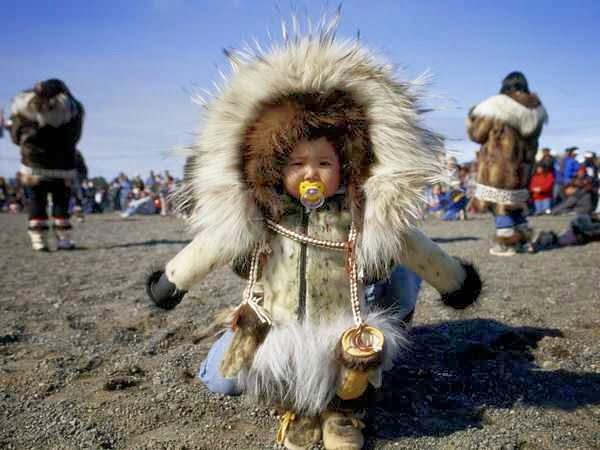
The short answer is probably yes, at least at some level. An Inuit Indian once said that people who are not keeping and eating everything they catch, kill or harvest are playing with their food, to take what you need and leave the rest behind, and that we should take only what presents itself to us. The Inuit believed that if we catch an unneeded fish, pass up a small buck or harvest asparagus or ginseng for cash, we’re breaking the laws of nature. He believed that when you have what you need don’t disturb the plants and animals any further. Plus, trust that the plants and animals will always make the best decisions for themselves and nature will control their population. This Inuit was a true sustenance survivalist and I commend him for his skills and accomplishments. However, although I agree with most of their practices and beliefs I am not sure that modern society can live the same way. Human population density does not allow us to continue like that. The ego of the modern sportsman and government regulations are other issues preventing it. We like to play with our food and our government encourages it.

Sportsmen’s relationship with nature is always changing. Modern sportsmen and outdoors enthusiasts are not involved because they need to, but rather because they want to. The urge to fulfill a primal instinct still exists and has forced the government to step in, making laws preventing us from destroying everything in the water, woods and air, and at the same time encouraging us to play. Take a look at the last 40 years as an example. Size and bag limits, speed and noise restrictions and emissions requirements. People who participate purely for entertainment and with almost complete disregard for nature are not as common now. However, people who just want to play with their food are.

Recently I overheard a conversation between two hunters who were wishing that darting animals for sport, hunting by remote control and paint balling deer was legal. Wow! Talk about playing with your food. They didn’t want the meat and were hunting only for the thrill of the kill and the ego blast. One of them thought it would be a great idea to dart an animal, take pictures and let it go. My head almost exploded! Come on outdoorsmen, think about what you’re doing to the animal physically and mentally and control your ego blast. To me this shows a complete lack of respect for, and understanding of, their quarry. My belief is that these two are definitely playing too many video games, have lost touch with reality and have no place in the woods. They believe that they would be practicing good conservation measures; after all it wasn’t going to kill the animal.

We need to be patient with each other. As Spock once said “the needs of the many outweigh the needs of the few”. We need to think about what each individual contributes to conservation activities and understand that we’re all in this together. If we are tolerant and stick together good things will happen.

Take a look at the money that outdoorsman and outdoor enthusiasts give for licenses, fees and donations. The money flows to all sorts of projects, yes, some of it does get wasted but for the most part the money really does an incredible amount of good. Just look around where you are locally and you’ll see it. There are stream remediation, fish restocking, habitat improvement and soil and water cleanup projects. These projects need to be funded in order for them to happen and it takes involvement from everyone.

For the good of nature we need to accept and cooperate with the rules and regulations and most importantly each other. I have to tolerate the trophy hunters - playing with their food, sorting through the herd, killing the genetically superior animals; and they have to tolerate me sitting on my favorite fishing hole, playing with my food, sorting slot limit fish for hours.

So go ahead play with your food, just remember to take what you need and leave the rest behind.  If we could only sort through jet skiers like that my life would be much better. (:


Sjn

Monday, February 24, 2014

What can we learn from the Japanese fisherman?


Japanese fish drying rack
The Japanese civilization has existed on an island for thousands of years. They don’t have a large land mass so they look to the sea for food. Still today one of their main food sources is fish.  The culture has adapted to eating just about anything edible that can be caught or harvested from the sea. I would expect that after all these years of fishing and harvesting around the island that there wouldn’t be any aquatic life left. The Japanese know they have seriously damaged the surrounding reefs and polluted the water. Over time they have found ways to protect the environment and keep themselves fed at the same time. The government is practicing sustainable fish and seaweed farming and is allowing selective harvesting of fish by individuals. The fishing techniques and gear used by the individual fisherman is what caught my interest.


Umbrella hooks
During a visit to Japan I wanted to do some surf casting. I needed some gear so I went to a basic bait and tackle store and then to a saltwater inlet. The store was like any store you would see in the U.S. but had some unexpected differences in the tackle they are selling. In the U.S. we use barbless and circle hooks for catch and release fishing. The Japanese use a hook that looks like two upside down umbrellas stacked on top of each other. It has a main shaft with several straight barbless prongs coming off it at about a 45 degree angle. My first impression was that it wouldn’t hook up very solid and come out easy, then like a fool, I touched it. Turns out that I was wrong, they work great! The prongs are not designed to work independently but as a unit. It was like grabbing a hold of one of those burdock seed pods that get stuck to your clothes in the fall. The dried out ones with the spikes all around it. If you try to shake it off or roll the hook out the next prong will get you. The only way to release the hook was to push it straight back, cussing doesn’t work. It is really a well-engineered hook. It is quick and easy to remove, once you know how, plus does minimal damage to the fish.


Jerk baits
At the bait and tackle store I noticed that a good 90% of the fishing rods were the collapsible type. They were the 3 to 5 section kind. The store stocked several different manufacturers, lengths and weights. I bought a medium weight, 5 piece. I thought that it would be easy to get in a suitcase but would probably go flying apart every time I made a cast. At the inlet I saw that everyone was using them and was wondering why. In the U.S. we essentially only use 1 or 2 piece rods. Why would an entire culture use a collapsible rod? My experience with their choice was positive, the rod didn’t go flying apart plus had a great backbone and a sensitive tip. The rods are high quality and very well engineered. I think the reason is compactness and portability. The Japanese have smaller living spaces relative to the U.S. and tend to live vertically not horizontally as most of us do. Also the Japanese prefer to walk or ride bike to destinations. A 10’ rod will breakdown into a 40” kit and can be easily stored and carried.

I’m going to try to find some advertisements for the lures and fishing poles I used and attach them to this blog. Take a look at them, they’re a little different than what we’re accustomed to using. Some of the gear was made in the U.S. but isn’t advertised here, we might be missing out on a good thing.